
The benefits of using a rebar bender and cutter in construction
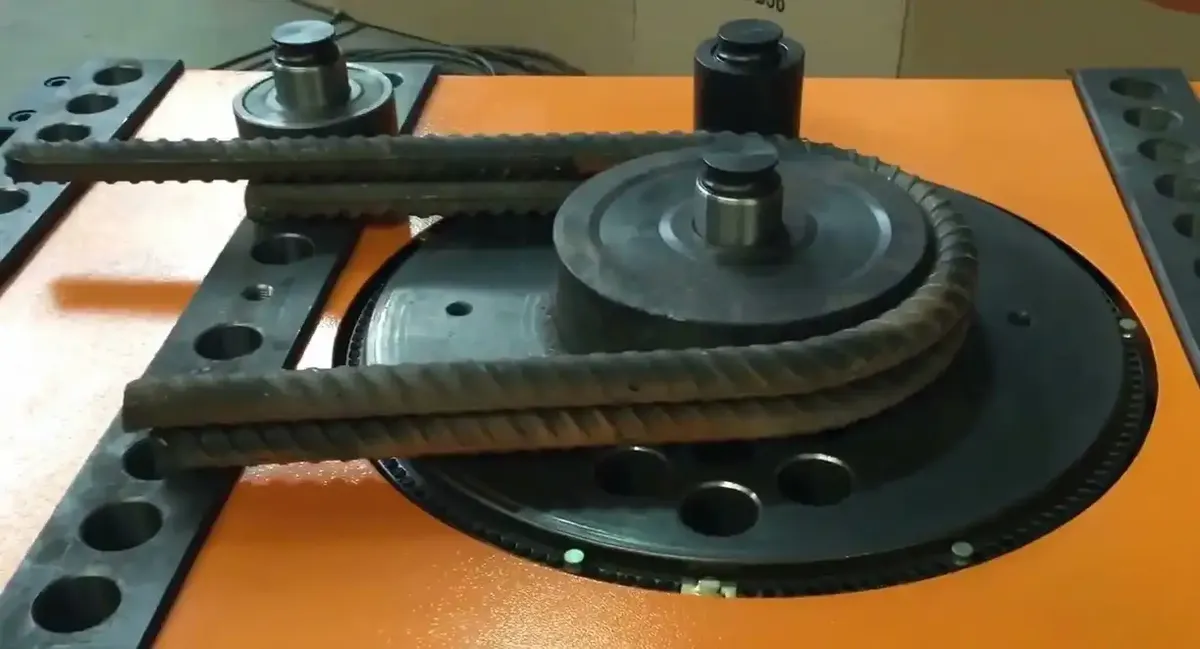
Why contractors, precast plants and rebar shops bend and cut reinforcing bar with machines instead of by hand — and what to look for when you choose a rebar bender and cutter.
NovoTech Machine Tools — sales and service team · updated
Why bend and cut rebar with a machine?
Rebar — reinforcing bar — gives concrete the tensile strength it lacks on its own, from house footings and retaining walls to parking garages, bridges and towers. Every bar has to be cut to length and most have to be bent: hooks, stirrups, ties, cranked bars and spirals. Done by hand with a bending bar and a cut-off saw it is slow, tiring and never quite the same twice. A rebar bender and a rebar cutter turn it into a repeatable job that one operator does in seconds per bar.
More bars per hour
A rebar cutter shears a bar in one stroke, and a bender makes a bend at the touch of a pedal. Most machines also take several smaller bars at once — stack cutting and stack bending — so a stirrup schedule that takes a crew all morning by hand is done in an hour, and the crew moves on to tying and placing.
Fewer injuries
Bending bar by hand means heavy force on the back, shoulders and wrists, and cutting with a disc throws sparks and sharp edges. With a machine the operator feeds the bar and steps on a pedal; the gearbox or the hydraulic cylinder does the work, behind guards and with an emergency stop within reach.
Bends that match the drawing
Structural drawings call for specific bend diameters, angles and leg lengths, and a bar that does not fit means re-work on site. A bender with a mandrel sized for the bar, a back stop and set angles makes the hundredth bar like the first, so the cage fits the forms and the inspector finds what the drawings show.
Lower cost and less scrap
Fewer labour hours per tonne, less re-bent and wasted bar, and the possibility to cut and bend in your own yard instead of waiting for — and paying for — a fabricator: for contractors and precast plants the machines usually pay for themselves on the first few projects.
Types of rebar benders and cutters
- Portable electric benders and cutters run on single-phase 110 or 220 V, weigh little enough for one or two people to carry and go to the job site in a pickup. They handle bar up to about 1″ (25 mm) and are the tool for site work, repairs and small jobs.
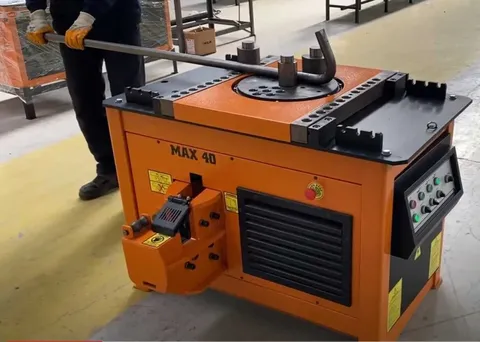
- Stationary rebar benders — electric, with a heavy motor and gearbox turning a bending disc — bend bar up to Ø2-3/8″ (60 mm) in rebar shops, precast plants and large sites. Most bend left and right and store several angles.
- Hydraulic and mechanical rebar cutters shear single bars to Ø2-3/8″ (60 mm), or several smaller bars at once. Hydraulic cutters are quiet and smooth; mechanical cutters with a flywheel are fast.
- Combined bender-cutters put a bender and a cutter on one frame — one machine, one power connection and one operator for small shops and sites.
- Stirrup, spiral and automatic machines — stirrup benders, spiral benders and CNC shear and bending lines — take over high-volume shapes and long schedules.
How to choose a rebar bender and cutter
Capacity
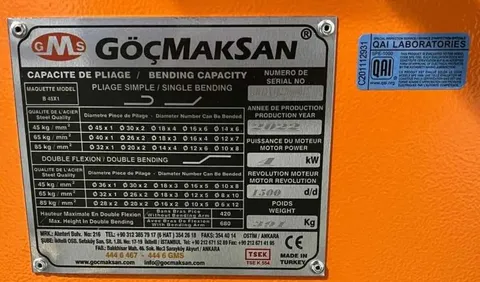
Start with the largest bar you bend and cut, and its grade. A machine's capacity is rated for one bar of a given diameter in a given steel strength, and it drops for higher-strength bar; it also lists how many smaller bars it takes at once. Small machines for residential and site work handle bar up to about 1″ (25 mm); industrial machines for rebar shops go to Ø2-3/8″ (60 mm) and more. Check the nameplate: it shows the capacities for each steel grade.
Power supply
Small machines run on single-phase 110 or 220 V and plug into a site generator or a shop outlet. Industrial machines for the rebar shop need three-phase power — usually 600 V in Canada — so make sure your building has it before you choose a size.
Bending angles and automation
On a modern bender the angles are set on a control panel instead of with stops on the disc. A PLC that stores several angles and the order of the bends lets the operator make a complete stirrup or a bar with several bends by stepping on the pedal — no re-setting between bends, no mistakes from tired hands, and the same shape every time.
Attachments
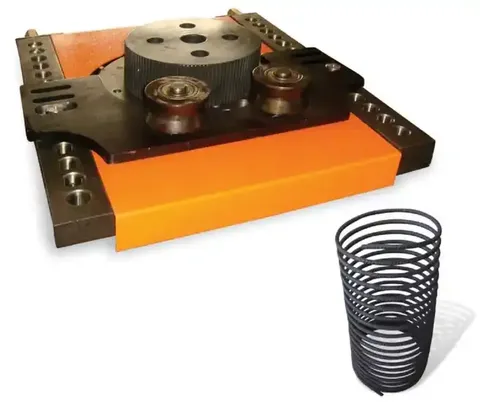
A spiral attachment turns a bender into a spiral bender for column and pile spirals, with the diameter set to the drawing. A stirrup attachment bends several stirrups at once. Check that the bender comes with the mandrels and hook tooling for the bar sizes and bend diameters you use, including J-hooks.
Hardened tooling
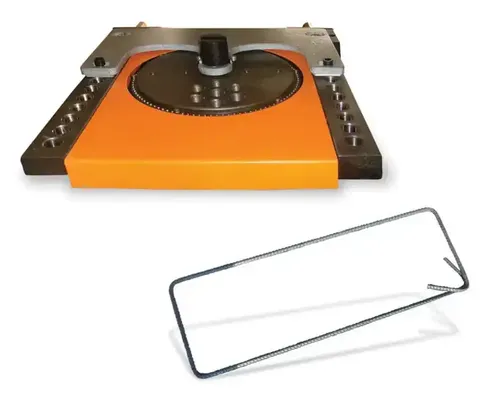
Bending pins, rollers and plates take the full force of every bend. Hardened tooling resists wear and deformation, keeps the bends accurate and does not crack under heavy bar — it costs more at first and much less over the life of the machine.
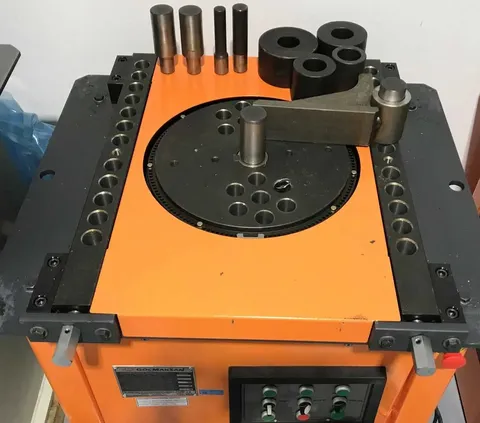
What to look for inside the machine
A CSA-approved electrical panel
In Canada an industrial machine must have an electrical panel that meets CSA requirements, inspected and labelled by an accredited inspection body. It protects the operator from electrical hazards and keeps you on the right side of the electrical safety authority and your insurer.
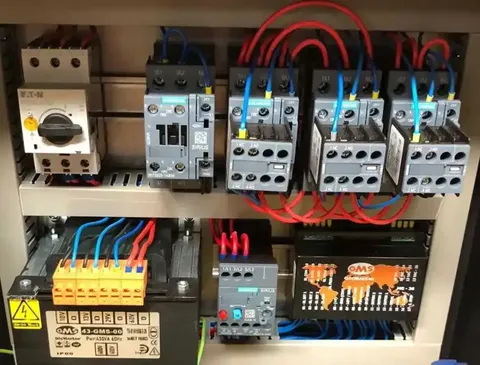
Known electrical components
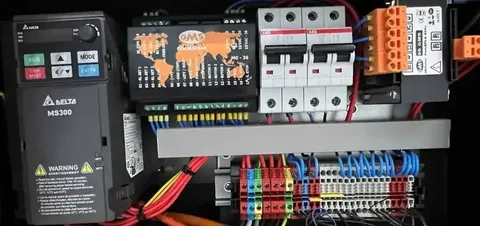
Contactors, relays and drives from manufacturers such as Siemens, Schneider Electric, Eaton and ABB are reliable, and their replacement parts are easy to find in Canada when something does fail.
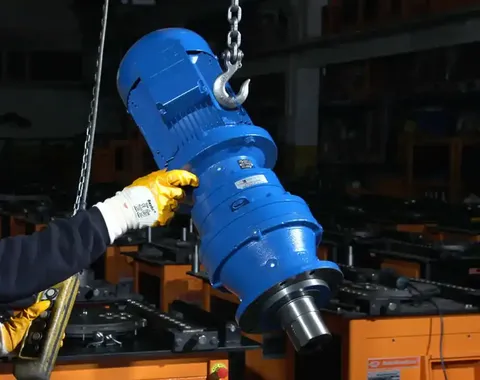
Motor and gearbox
The motor and gearbox carry the whole load of the bend. An industrial motor coupled directly to a heavy planetary gearbox runs cool under continuous work, keeps its speed under load and needs little maintenance.
Motor protection
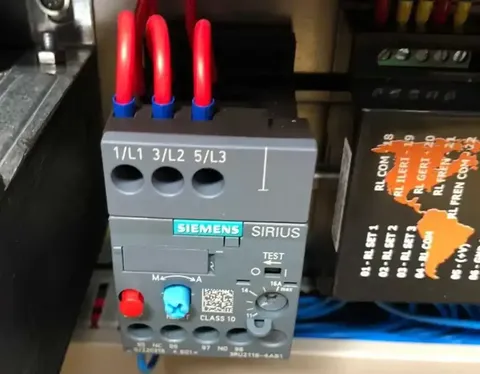
A thermal overload relay — or a variable-frequency inverter drive — stops the motor before an oversized bar or a jam can overheat or damage it. An inverter also starts the motor softly, sets the bending speed and saves energy.
Portable or stationary?
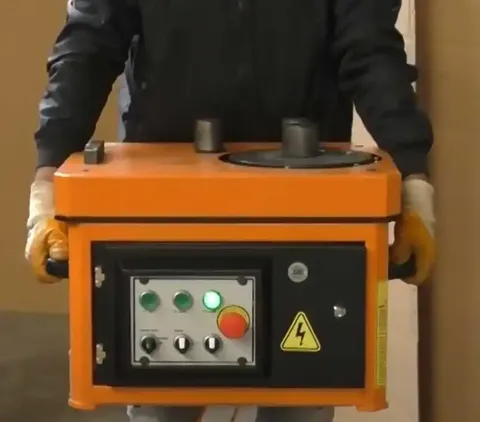
Single-phase machines for bar up to about 1″ are light and compact: one or two people move them, they fit in a van or pickup, and they work right where the bar is placed. Three-phase industrial machines for bar up to Ø2-3/8″ are heavy and are moved with a forklift or crane — they belong in the rebar shop or the yard of a large site, where they process tonnes of bar a day.
Budget: look at the cost per tonne, not the price tag
A low-priced machine is attractive until it stops in the middle of a pour. Compare the capacity you really need, the build quality, the tooling that comes with the machine, the warranty and — above all — whether parts and service are available in Canada. A well-built bender and cutter from a reputable manufacturer works for decades and keeps its resale value.
GMS rebar benders and cutters from NovoTech
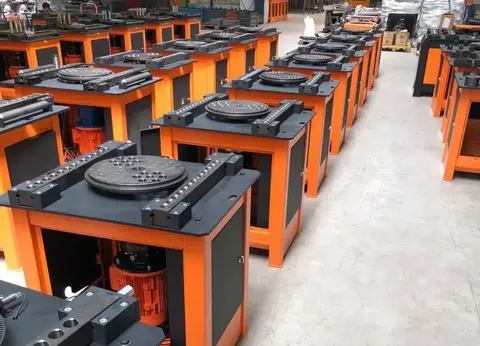
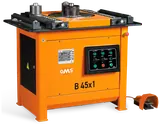
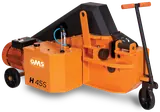
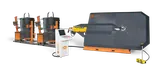
NovoTech supplies the rebar machines of GMS (GöçMakSan), built in Ankara, Turkey, since 1960: stationary benders from Ø1″ (26 mm) to Ø2-3/8″ (60 mm), portable 110 / 220 V benders and cutters for the job site, hydraulic and mechanical cutters to Ø2-3/8″ (60 mm), stirrup and spiral benders, the MAX 40 combined bender-cutter and automatic shear lines. Every machine comes with a CSA-approved panel, and parts, tooling and service are stocked in Mississauga, Ontario, Canada.
Machines in this article
Request a quote
Tell us the bar sizes and grades you work with, the shapes and quantities, and the power you have on site — we will recommend the bender and cutter and send pricing and delivery. We answer within one business day.
Prefer to talk? Call +1 647 526 5510 (Mon–Fri 9:00–17:00 Eastern) or email infoNovoTechMachineTools.com.
1365 Mid-Way Blvd, Unit 26, Mississauga, ON L5T 2J5, Canada
Represent NovoTech in your city or province
Sales agents wanted across Canada
NovoTech is appointing independent sales agents and dealers in cities and provinces across Canada — British Columbia, Alberta, Saskatchewan, Manitoba, Ontario outside the GTA, Quebec and Atlantic Canada. If you already call on steel fabricators, rebar shops, precast plants, HVAC shops or contractors, add a proven line of GMS, Dener and other metalworking machinery to what you offer.
- Open to individuals and companies with customers in metal fabrication or construction
- Quotations, brochures, videos and demonstrations prepared by NovoTech for your customers
- Installation, operator training, spare parts and technical support stay with NovoTech in Mississauga, ON, Canada
Tell us your territory and the customers you serve — we reply within one business day.